

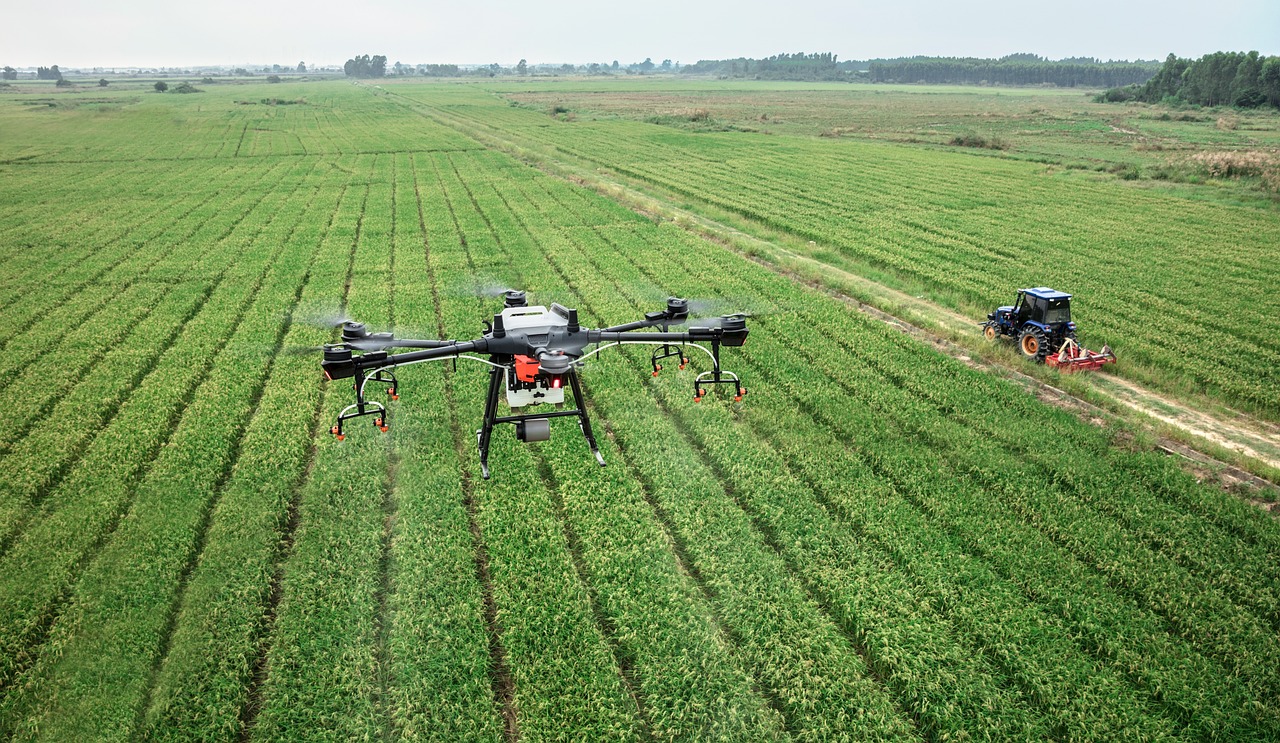
In the constantly evolving landscape of agriculture, technology plays a pivotal role in shaping efficient, sustainable, and cost-effective farming practices. Among the myriad of innovations, the application of drones, or unmanned aerial vehicles (UAVs), in agriculture, commonly referred to as agri-robotics, has emerged as a game-changer. This article delves into the transformative impact of drones on farming practices, highlighting their applications, benefits, and future prospects.
Revolutionizing Agriculture with Drone Technology
Drones have transcended their initial military and recreational uses to become powerful tools in agriculture. Their ability to cover vast areas quickly and gather precise data has made them invaluable assets for modern farmers. Key applications of drone technology in agriculture include:
- Crop Monitoring and Health Assessment: Drones equipped with advanced imaging technologies can monitor crop health, identify disease outbreaks, and assess crop maturity. This real-time data allows farmers to make informed decisions, ensuring timely interventions and optimal crop management.
- Precision Agriculture: Through precise mapping and data collection, drones facilitate targeted application of inputs such as water, fertilizers, and pesticides. This precision farming approach minimizes waste, reduces costs, and enhances crop yield and quality.
- Irrigation Management: Drones equipped with thermal cameras can identify areas of a field that are dry or need irrigation. This helps in optimizing water usage and preventing water wastage, contributing to sustainable water management practices.
- Soil and Field Analysis: UAVs can perform detailed soil health assessments and topography mapping, enabling farmers to plan seeding patterns and optimize land and resource use.
- Planting and Seeding: Drone technology also supports direct seeding, where drones distribute seeds in designated areas. This method is not only efficient but also reduces labor costs and environmental impact.
Advantages of Drone Technology in Agriculture
The integration of drones into farming practices offers a multitude of benefits:
- Increased Efficiency and Productivity: Drones cover large areas in a fraction of the time it would take using traditional methods, significantly boosting efficiency and productivity.
- Cost Reduction: By enabling precise application of resources, drones help reduce the cost of inputs and labor, leading to higher profitability.
- Enhanced Crop Health and Yield: Timely and accurate data collection facilitates better crop management, resulting in improved crop health and increased yield.
- Sustainability: Drones contribute to sustainable farming practices by optimizing resource use and reducing the environmental footprint of agriculture.
The Future of Drones in Agriculture
As drone technology continues to advance, its applications in agriculture are expected to expand, further revolutionizing the sector. Future developments may include autonomous drones capable of performing tasks such as weeding, harvesting, and even pollination. Moreover, the integration of artificial intelligence and machine learning will enhance data analysis, making farming practices more efficient and environmentally friendly.
In conclusion, the rise of agri-robotics, particularly through the use of drones, is transforming the agricultural landscape. By offering precise, efficient, and sustainable solutions, drones are not just shaping the future of farming but also ensuring food security for the growing global population.